how to hire a film crew in ghana
To hire a film crew in Ghana, start with what the film is for and where it will be shown, then choose a crew that has filmed that kind of job before and can show you the result. Ask who plans it, who edits it, whether drone and photography come with the same crew, and what you will receive at the end. Then arrange the access, the people and the safety briefing on your side before the day. This is how we work at Creat.ing, from Accra, on films for companies like Meridian Port Services at Tema Port and Springfield offshore.
7 minute read · Updated 1 October 2026
Start with where the film will be shown
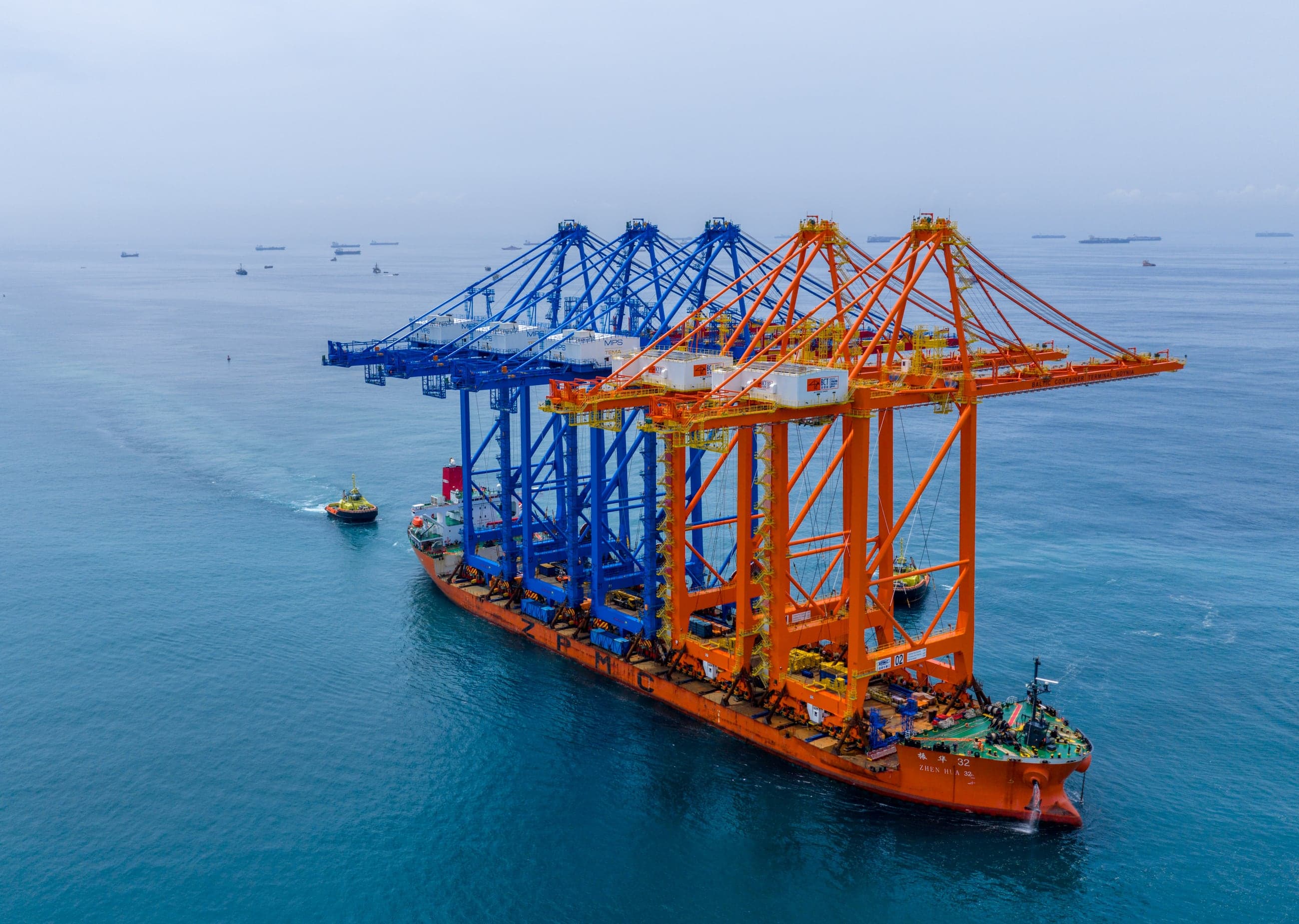
The most useful sentence in a brief is not about the camera. It is where the film will end up. When Meridian Port Services asked us to film their new cranes arriving at Tema Port, the brief was a documentary they could use themselves: at their events, on their YouTube channel and on their website. That one sentence decided the length, the interviews and the versions before anyone picked up a camera.
Compare it with Springfield's brief for the Afina-1x discovery offshore, which asked for coverage for their own media, weighted to photography more than film, or UCT's for their evening with Legrand, which was simply to cover the night as it happened. Three clients, three briefs, three very different shoots. A crew that does not ask this question first will plan the wrong day.
Know which of three jobs you are hiring for
Most film work for a business in Ghana is one of these, and each needs a different crew and a different plan:
- A corporate event: a launch, a commissioning, a dinner, an inauguration. It happens once, on its own schedule, and the crew follows it. The planning is about positions, the run of show and not missing the moment.
- A documentary or corporate film: a story told over days, with interviews, location filming and an edit that shapes it. The planning is about the story, who speaks, and access to the places that show the work.
- A one-off moment: a ship arriving, an aircraft landing, an opening. There is one chance at every frame, so the planning is about where the cameras stand, on the ground and in the air.
Plenty of jobs mix them. The MPS crane film was a documentary built around one-off moments: the heavy-lift ships arriving, the cranes going up, with interviews with the people who run the terminal around them.
The questions to ask a crew before you book
- Have you filmed this kind of job before? Ask to see the finished film, not a showreel.
- Who plans it with me, and will I see a shot list and a schedule before the day?
- Is the editing done by the same team, or handed to someone else afterwards?
- Can you film from the air, and how do you plan drone flights around the site's rules?
- Can a photographer come with the film crew, so we get photos from the same day?
- What do I receive at the end: the full film, a short cut, versions for social, subtitles?
- How do reviews work: when do I see a cut, and how many rounds of notes?
What you arrange, and what the crew arranges
Some things only you can open. On a working site the crew needs access agreed for the dates, a contact who can walk them in, and the site's safety briefing. On an industrial site like a port terminal or a drillship, that briefing is not a formality: the crew works where the site says, when the site says, and plans the day around it. People need to know they are being filmed, and the ones who will speak on camera need a time slot that will not be cancelled by the day's work.
The crew's side is the plan itself: the story, the interview questions agreed with you, the shot list, the positions for the moments that only happen once, the kit, and the drone flights planned around the rules of the site. A good crew asks you for what it needs early, rather than discovering it at the gate.
One chance at every frame
Some moments do not come twice. When MSC Diletta and MSC Türkiye, the first 24,000 TEU ships to call in West Africa, arrived at Tema, the water salute happened once. When a private jet landed in Ghana for a client, the salute on the apron happened once, and a rainbow formed in the spray for a few seconds. At the commissioning of Terminal 3 the fireworks went up once, over the water, after dark.
What makes those frames is planning, not luck: knowing the run of the moment in advance, putting cameras on the ground and in the air before it starts, and lighting the parts you control so the crew is free for the parts you do not.
Photos from the same shoot
If the film crew can bring a photographer, take it. One day on site gives you the film and a full set of photographs for press, annual reports, the website and social, all telling the same story in the same light. On most of our productions a photographer works alongside the film crew for exactly this reason, and some clients, like Springfield offshore, weighted the job to the photographs.
After the shoot
Filming is the shorter half. The edit decides what the film says: the cut, the colour grade, the music and the sound mix. You should see a cut, give notes, and approve the final film, rather than receiving a finished file you never had a say in.
Ask for the versions you will actually use: the full film for events and the website, a short cut, vertical edits for social, and subtitles, because most people watch on a phone with the sound off. They all come from the same footage, so it is far easier to plan them at the start than to ask for them afterwards.
What it costs
It depends on the days of filming, the size of the crew, the locations, drone work, the number of interviews, the length of the film and how many versions you need. Send us the brief, where it will be shown and the date, and we will send a quote with the schedule.